



There are video games that, no matter how old or basic they may be, become classics and withstand the test of time. There are also countless cases of games being revitalized through remakes, remasters, reboots, or reimaginings (reinterpretations). Of these options, the latter is almost always the one that most catches my attention. Whether by adapting old mechanics or incorporating new ones, they can not only give new life to outdated works but also, in many cases, expand to a new audience that may or may not be familiar with the original experience.
Snake: Gridmaster is a clear example of this. The premise is as simple as it is effective: an enhanced version of the classic Snake, but incorporating roguelike elements. While this summarizes the project almost perfectly, it does not fully do justice to the final result, which has managed to surprise me and hook me despite the fact that I have never been a fan of the original game.
Here we are not limited to the basic formula of eating apples while avoiding crashing into walls or biting ourselves. That foundation remains, but several layers of complexity are added. First of all, there are several types of enemies, each with their own movement patterns and attacks, their own stats, weaknesses, and strengths. In addition, the levels or mazes we progress through are procedural, so we never play two identical runs. It is also possible to reload the same seed if we want to perfect a run.
Mechanics
From a gameplay perspective, movement controls are exactly what we would expect. We press the direction we want to move in while trying to avoid enemies and other obstacles as we collect apples, coins, and all kinds of items. These new items are an essential part of the experience and one of the ingredients that make the game so addictive.
Types of Items
Power-Ups
There are currently 10 different power-ups that can provide permanent or temporary improvements. We have a size reducer that, as its name indicates, reduces our length to make movement easier without taking damage. There are also shields that we can accumulate, as well as health recovery.
Temporary power-ups can provide benefits such as increased speed, point or food multipliers, a magnet that attracts coins from a greater distance, invincibility, time freeze, and even the ability to pass through walls. In general, these types of items tend to appear sporadically throughout the levels.
Upgrades
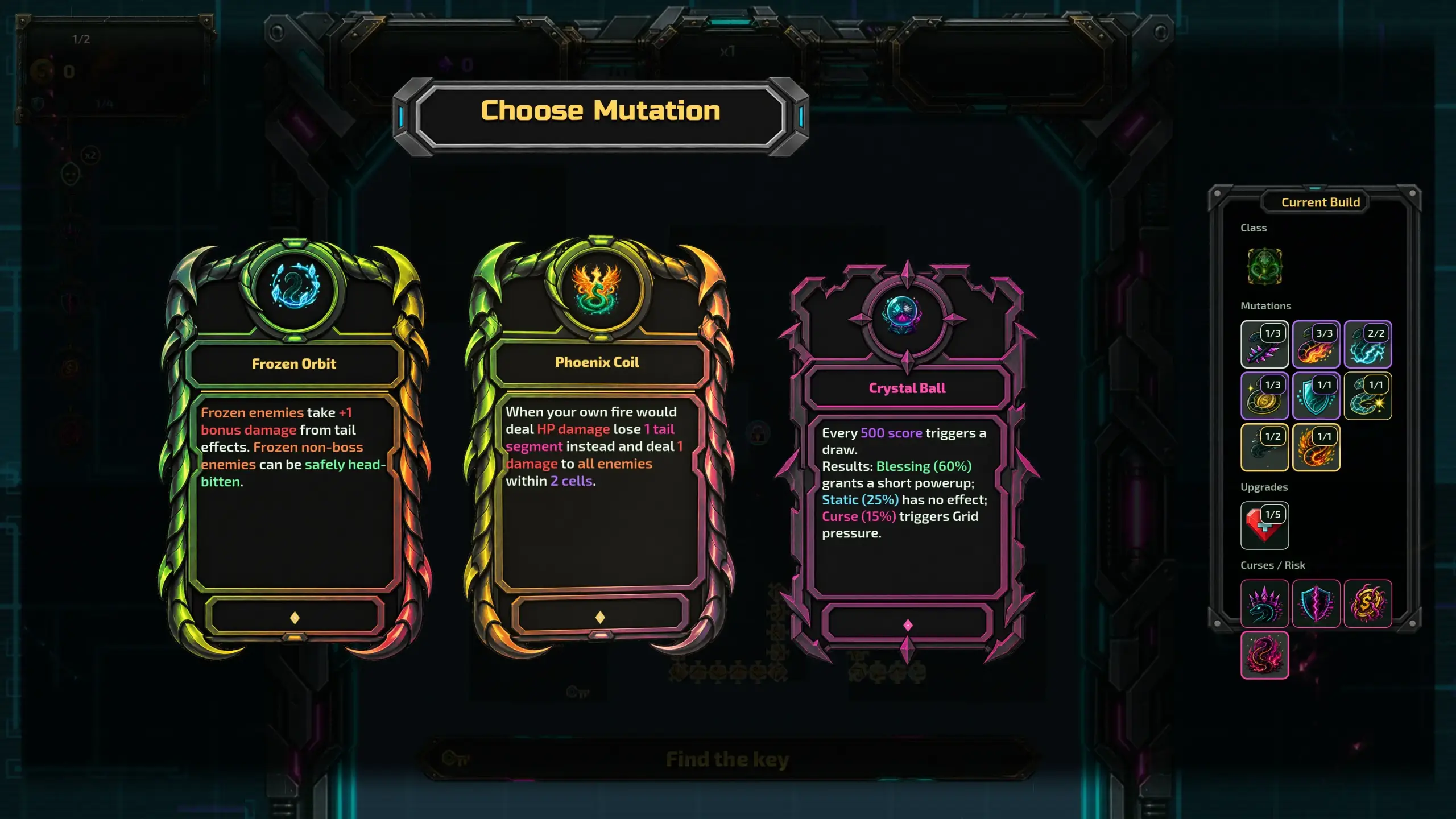
Upgrades always provide benefits and, in some cases, curses that affect the entire run and disappear when it ends, whether through death or by defeating the final boss. This is undoubtedly the main attraction of the experience, at least in my opinion, because depending on the upgrades we obtain and improve, we can create different builds that drastically change our gameplay strategy.
These upgrades range from basic aspects such as increasing our maximum health or shield capacity, applying point multipliers to certain actions, or granting different types of attacks that we can perform with our tail. These become increasingly complex and powerful, ranging from basic attacks that deal little damage to attacks that freeze enemies, powerful electrical discharges, and even the ability to breathe fire while leaving fire craters in our wake, which can also injure us.
As in every good roguelike, our builds are the very essence of the game, and experimenting with different combinations becomes highly addictive. As we increase the level of our upgrades, they can combine to create new and more powerful ones. However, the game also demands a certain level of strategy when managing them, because we may end up with a setup that we are unable to control and that leads us to ruin. In my case, for example, there is an ability that teleports us two tiles forward whenever we eat an item or enemy. I have never been able to complete a full cycle with that ability active.
Dynamics
The story is quite simple: the Gatekeeper has trapped us in an infinite loop, and we must defeat him in order to escape. Each game board is unique, so the challenge lies in adapting to the changes in order to survive. Once we manage to defeat the final boss, we unlock the next loop, which introduces greater difficulty. At the moment there are 10 in total. The first ones are relatively easy and serve as an introduction, but as we progress things become increasingly difficult, reaching points where the game becomes a thrilling experience in which every slight change in direction can mean the end of the run.
Biomes
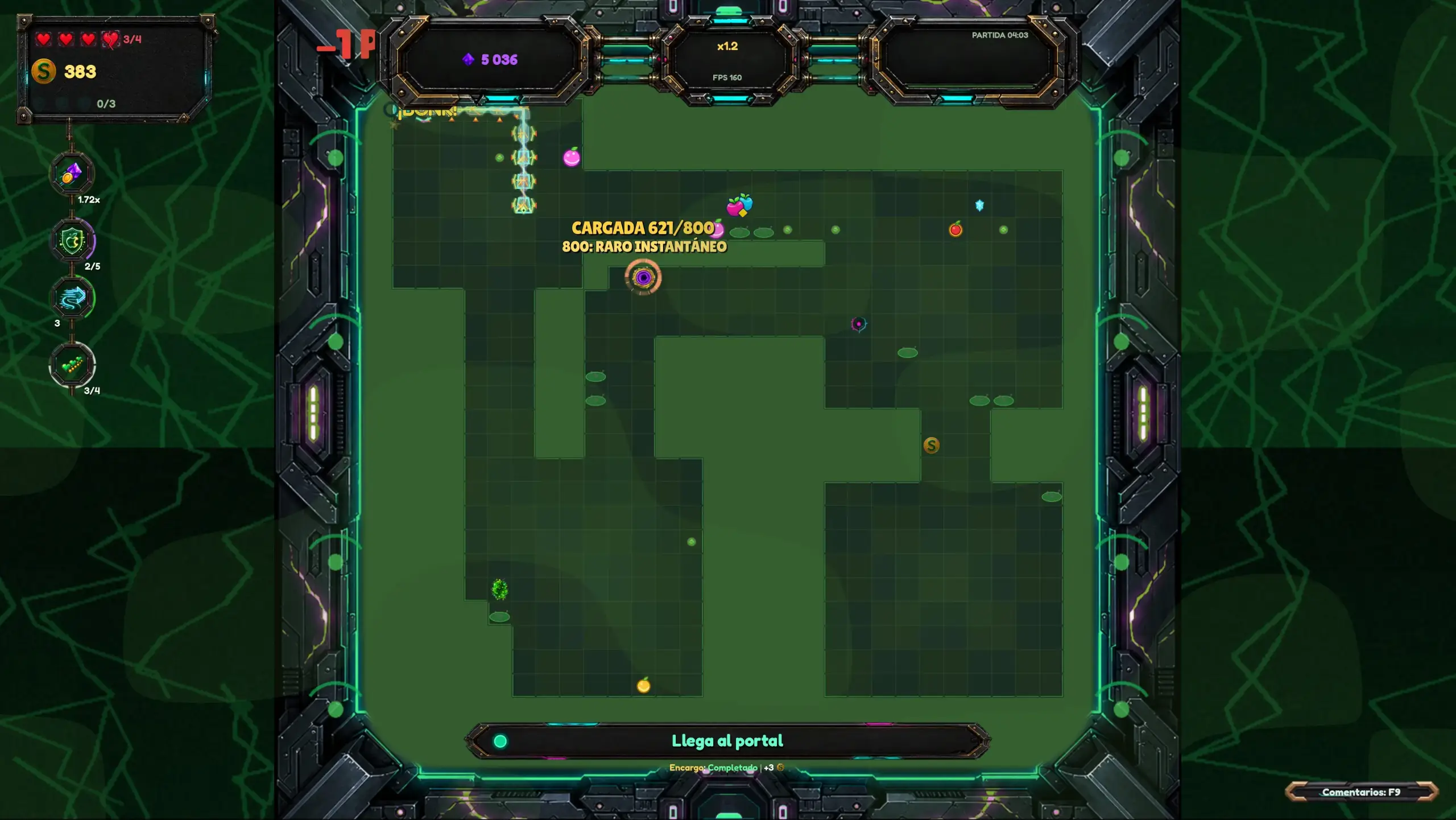
The levels are divided into different biomes. At the moment there are 6 biomes available. The Classic Loop is the first and easiest of all, where we face the most basic enemies and traps, as well as a mini-boss at the end, the Gatekeeper. Once we defeat him, we advance to the Forest, where things begin to get more complicated. New enemy types, traps, and biome-exclusive obstacles appear, such as acid pools that damage us on contact.
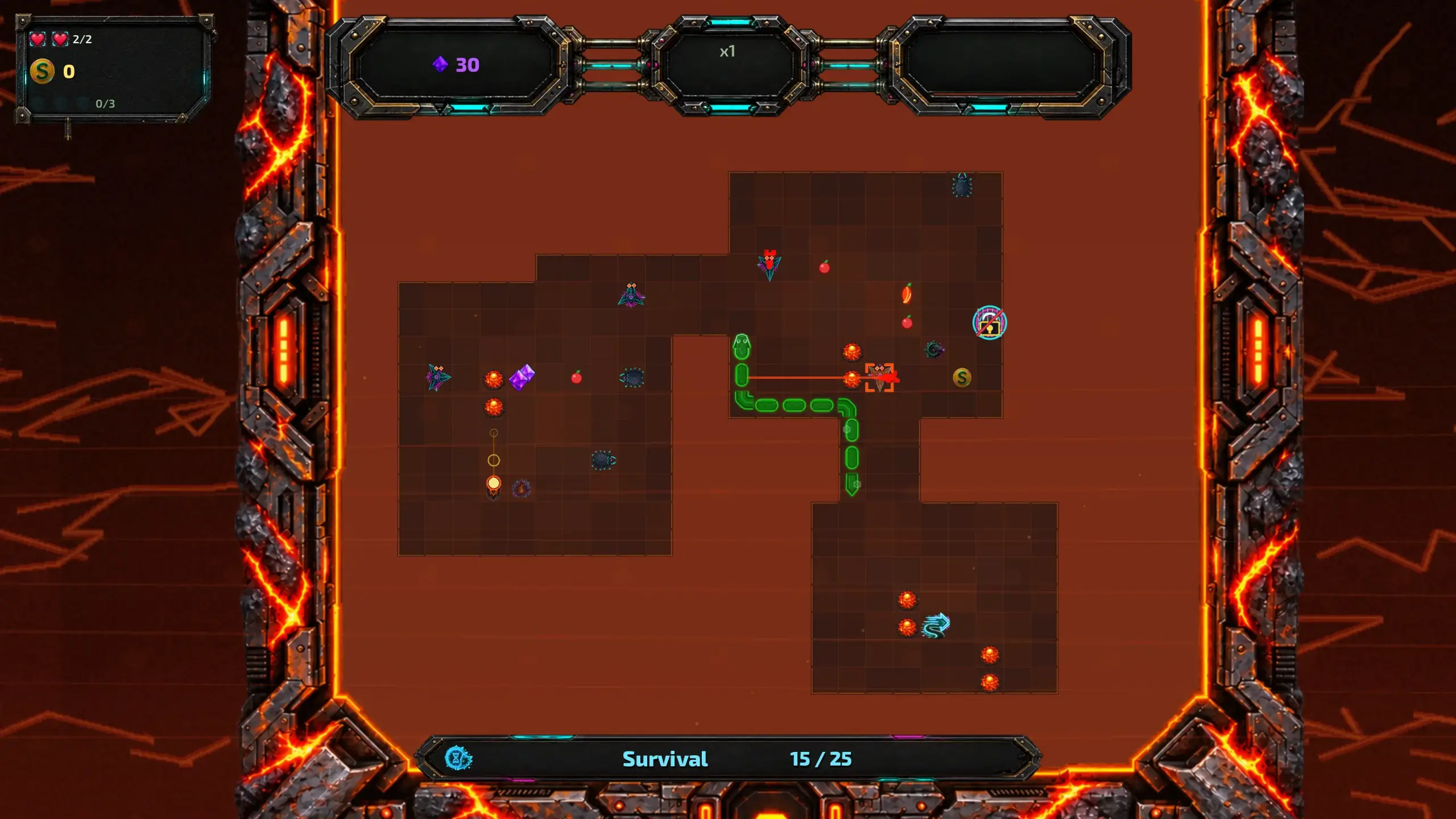
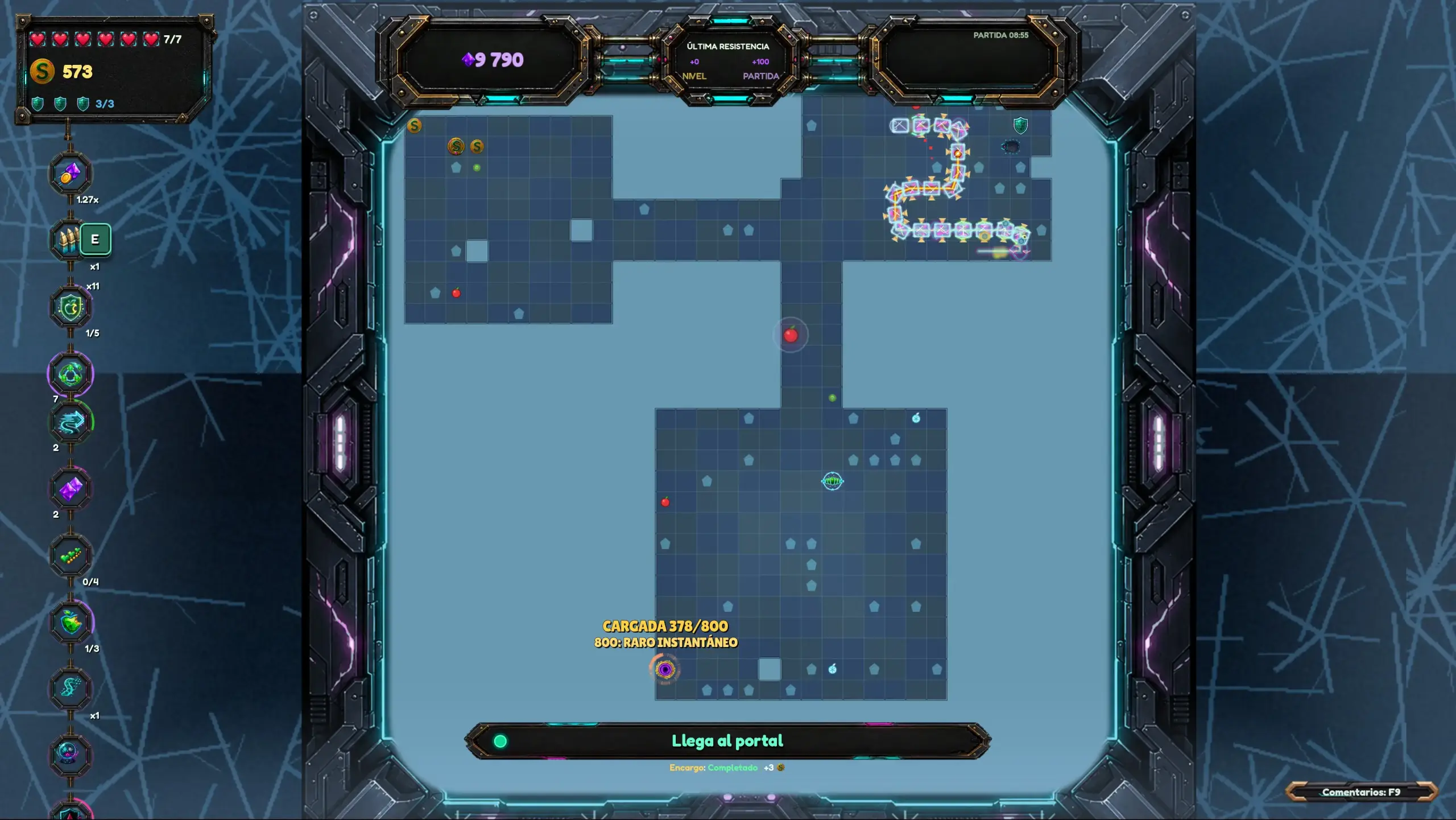
Next comes the Burned Sector, which makes things even more difficult with stronger enemies and more dangerous environmental hazards such as craters. It also greatly increases the pressure by causing the map to gradually fill with obstacle tiles, reducing our movement space and forcing us to perform real acrobatics to come out unscathed, or at least alive.
Following this, we encounter the Frozen Loop (my favorite), where once again we must be even more careful when moving, especially because of the numerous thin ice blocks that break when we pass over them and, above all, the ice blocks that cause us to slide and can even cancel our turns. I do not know how many perfect builds I have lost by stepping on one of those cursed blocks, but that is part of what makes this game so enjoyable: resilience, learning from our mistakes, and returning better prepared.
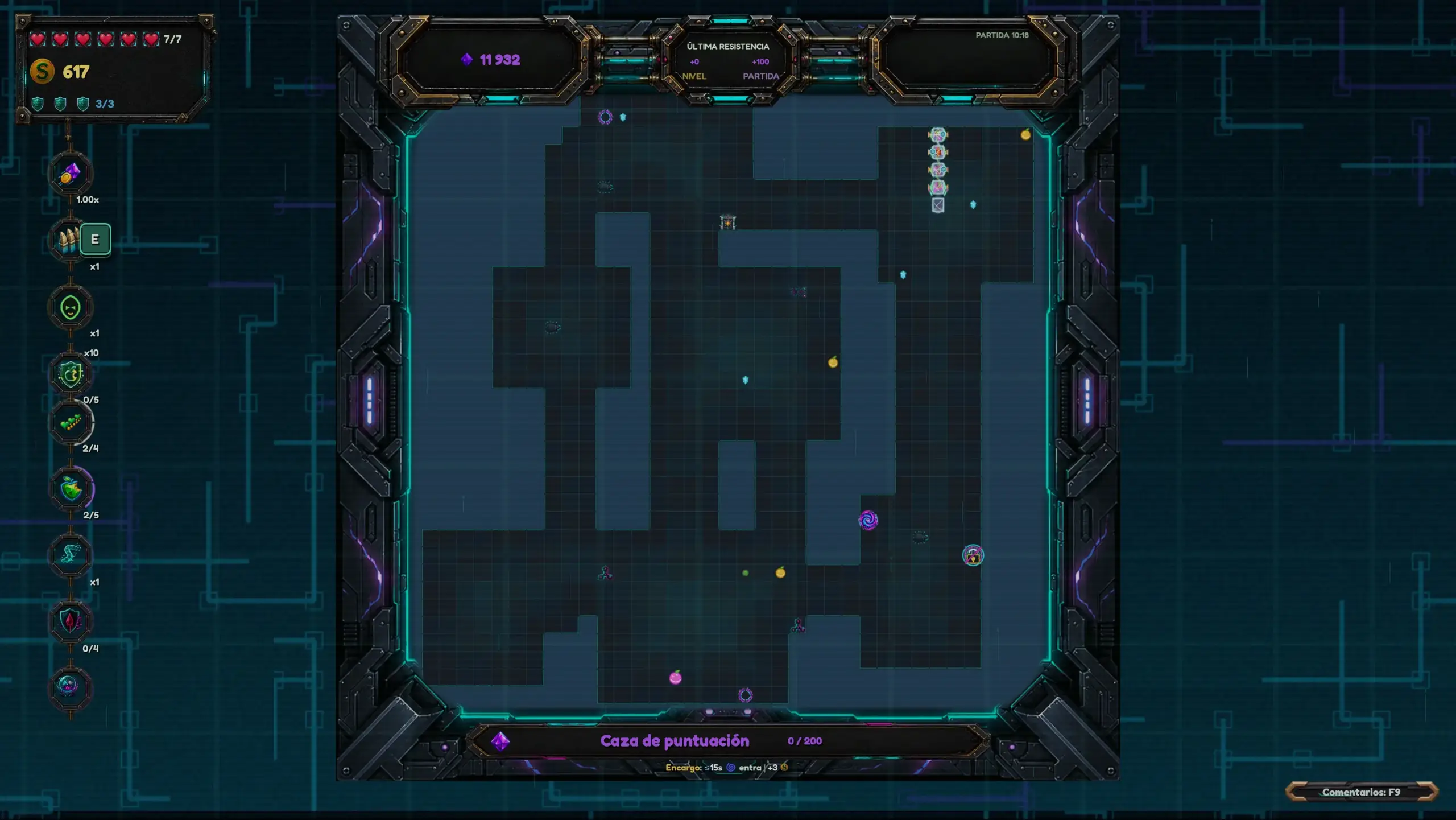
The last of the biomes, the Technological Sector, is undoubtedly the ultimate test of our skill in controlling the snake. Frenetic, packed with dangers, and unpredictable in its final stage when we face the powerful Gridmaster. If we manage to defeat him, we complete the cycle and can move on to the next difficulty level. Otherwise, it is time to start over from the beginning of the cycle.
Types of Snakes
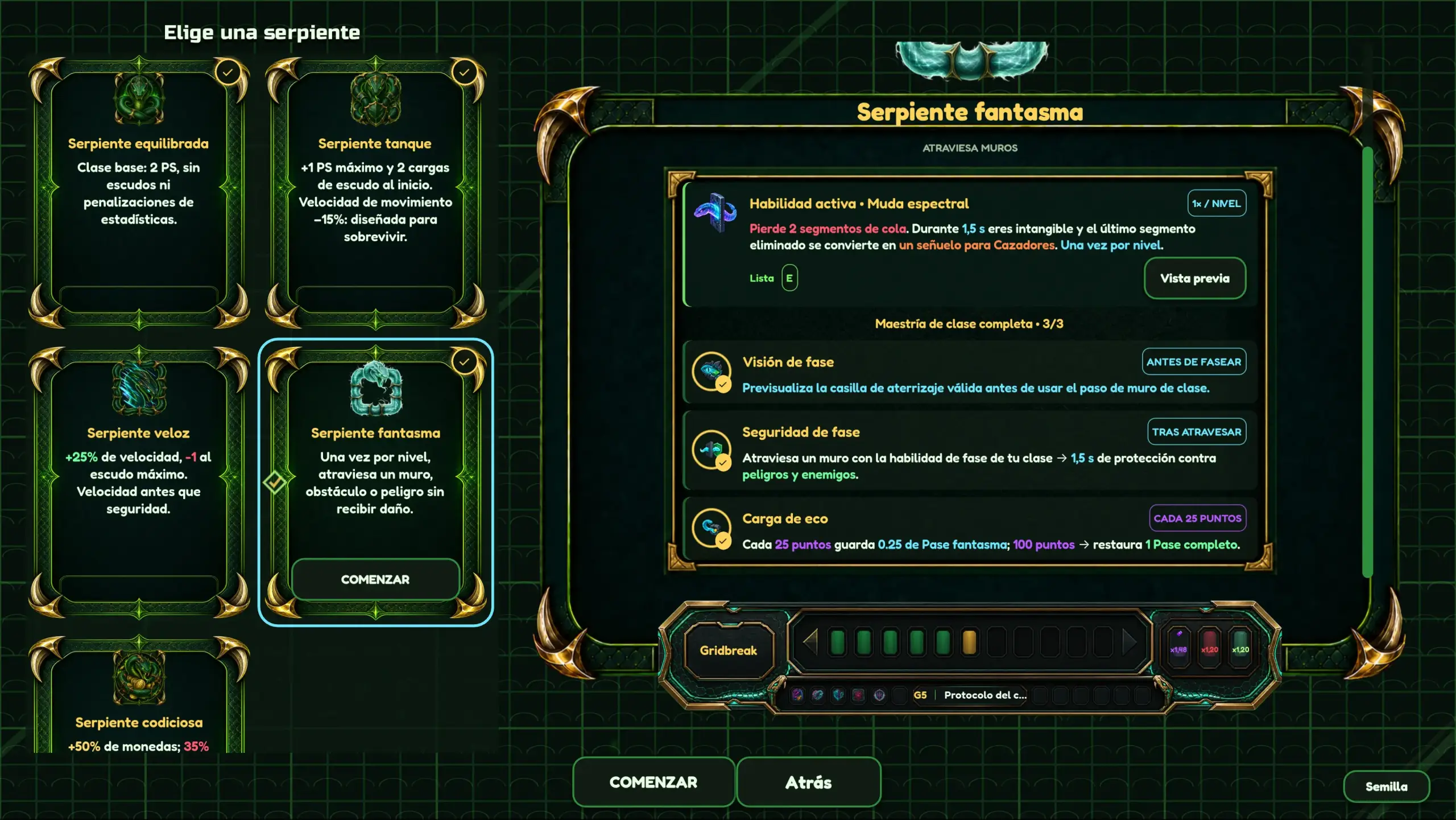
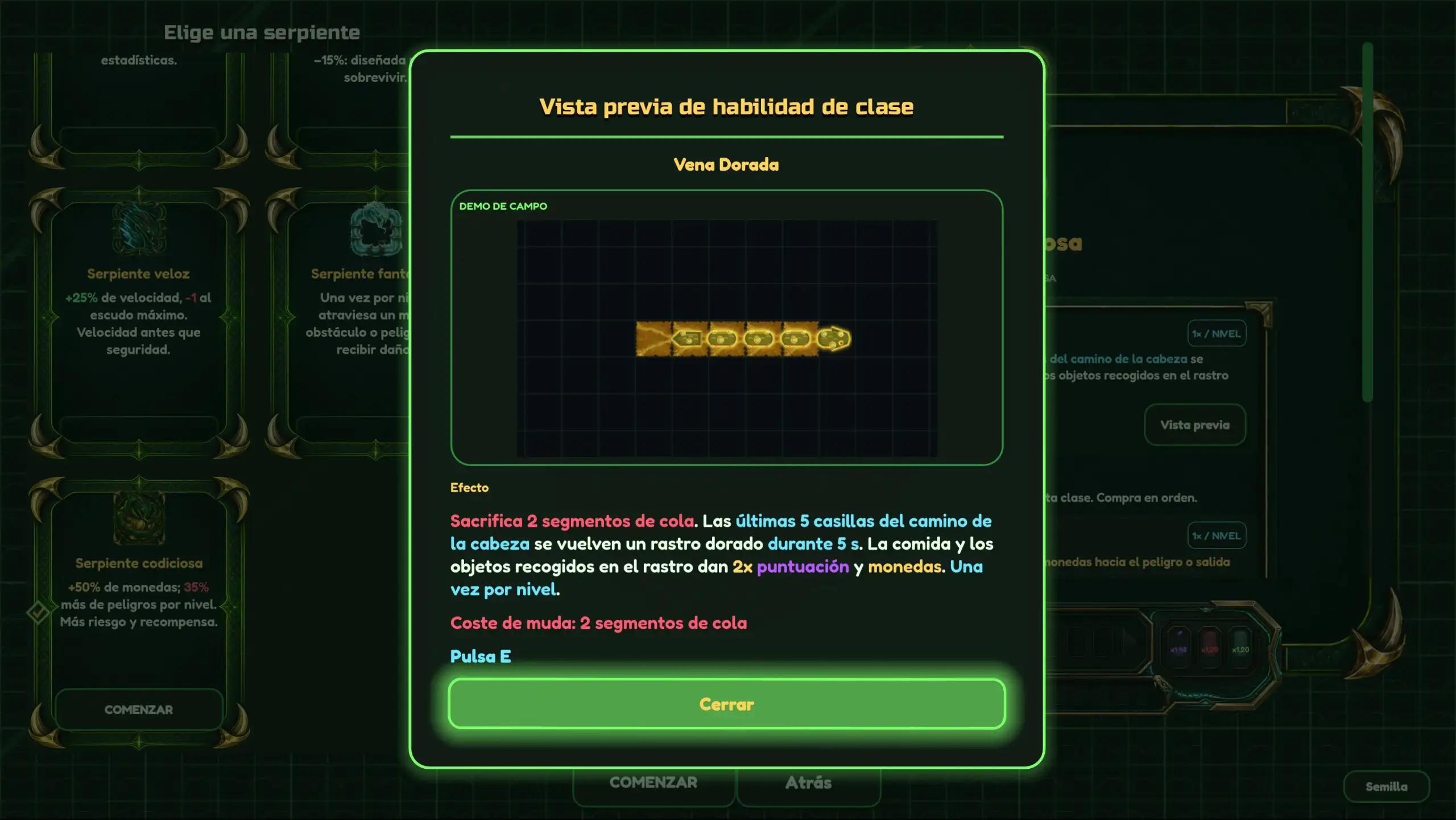
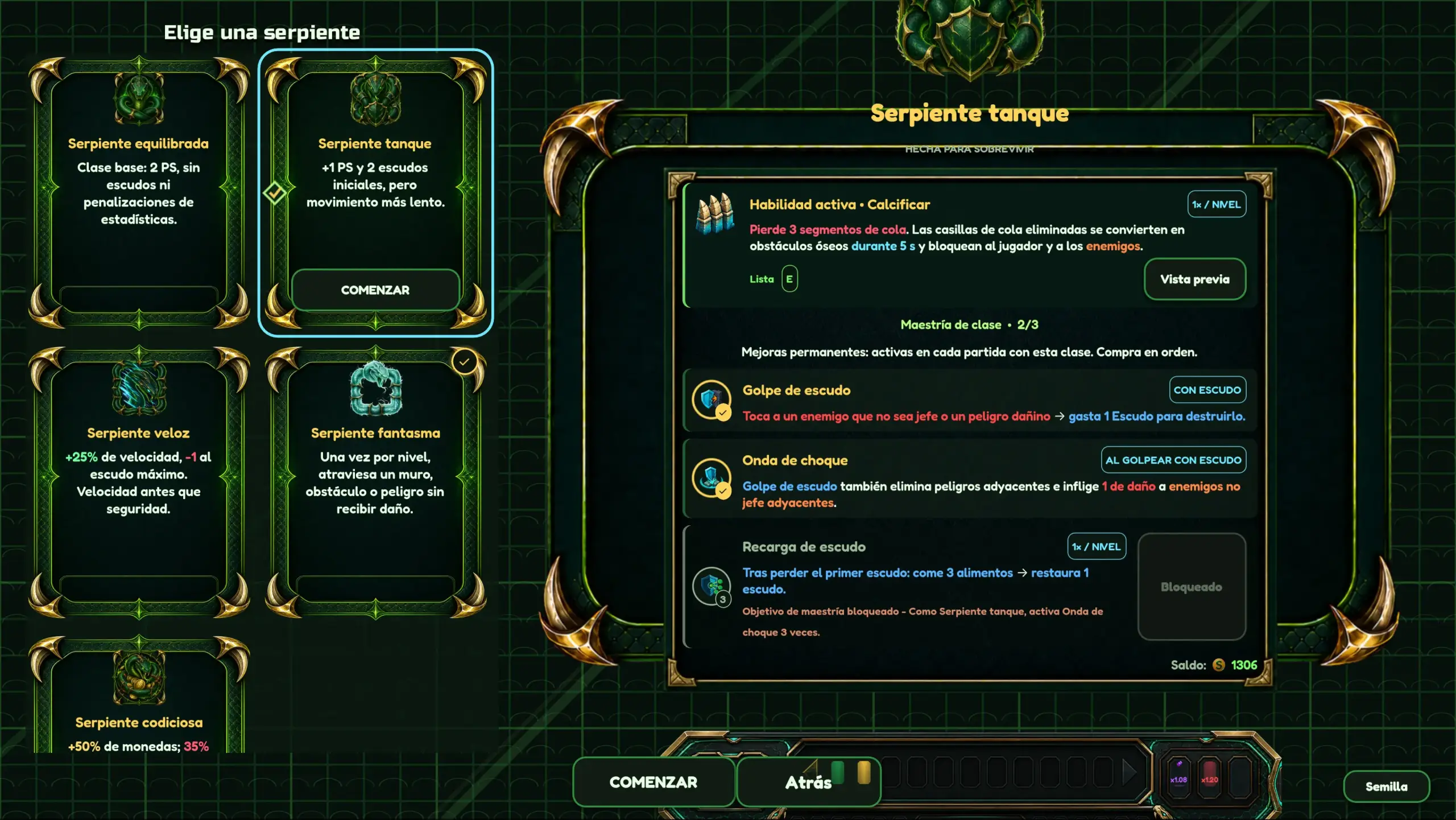
There are 5 types of snakes, each with their own stats and abilities, which largely determine the playstyle to which they are best suited. These abilities can only be used once per level if we meet the necessary requirements, and they reset upon entering the next level. Each snake has 3 mastery levels that grant certain bonuses. To activate them, we must first unlock them by meeting specific requirements and paying the indicated cost.
Balanced
This is the most classic and conservative option. It starts with 2 health points but no shields. Its ability consists of sacrificing 2 tail segments to gain 20% additional speed for 3 seconds and recover 1 health point.
Tank
Designed to endure as much as possible, it starts with 1 additional health point and 2 shield points but moves 15% slower. Its ability sacrifices 3 tail segments and transforms them into obstacles that block both the player and enemies.
Swift
The fastest option, with 25% additional movement speed, but at the cost of 1 level of maximum shield capacity. Its Comet Mode ability sacrifices 3 tail segments and moves 5 tiles at triple speed. During this period, its body kills lethal enemies and deals 1 damage to bosses.
Ghost
Once per level, it passes through a wall, obstacle, or hazard without taking damage. Its Spectral Molt ability sacrifices 2 tail segments and becomes invincible for 1.5 seconds. In addition, the last removed segment becomes a decoy for enemy hunters.
Unlocking Upgrades and Power-Ups
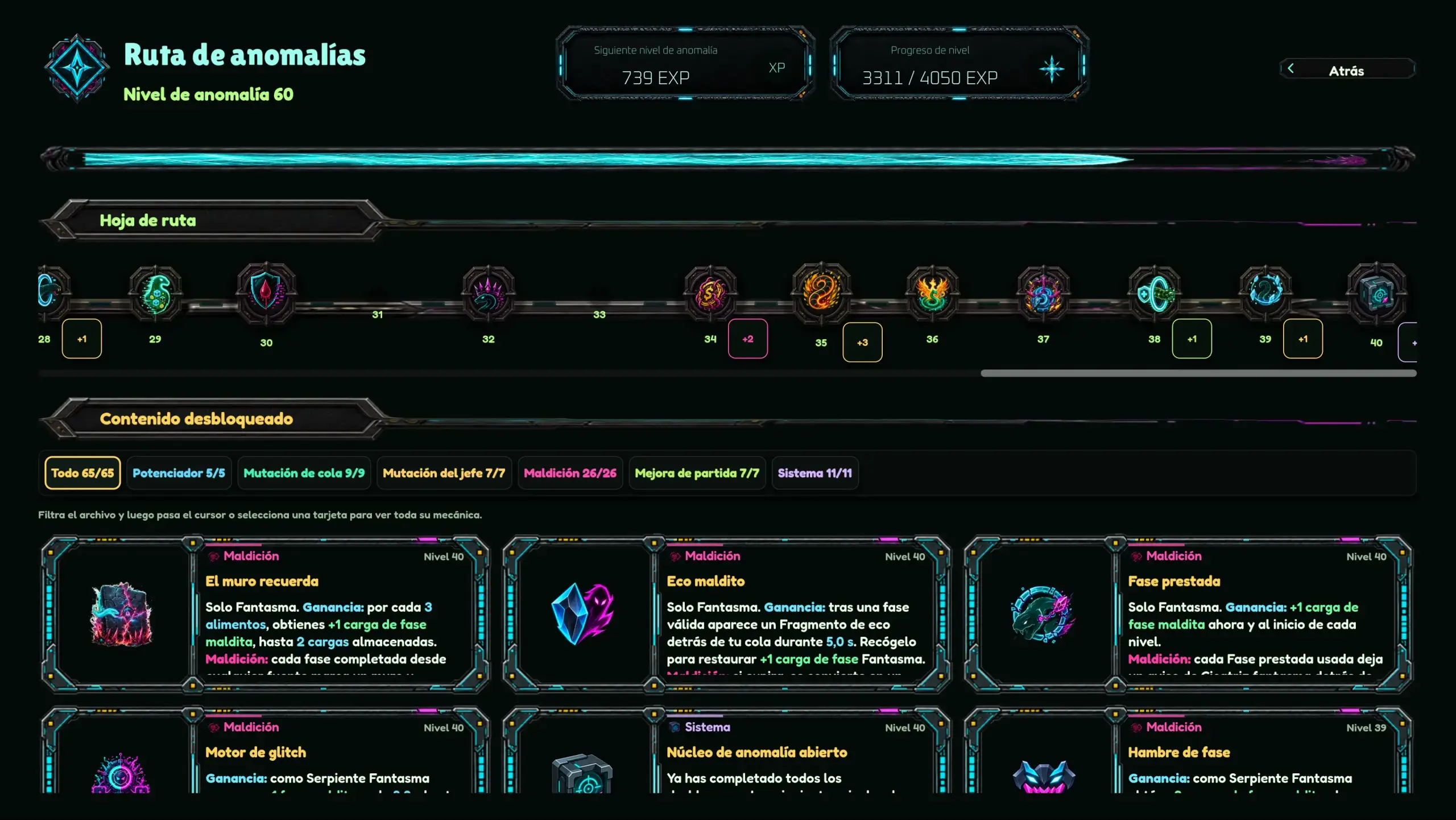
When we begin our adventure, we only have access to the most basic power-ups and upgrades. Each game played increases our account’s global experience, and upon leveling up we unlock new power-ups that will begin appearing in future runs. This helps keep the experience balanced, since we will not have access to the most powerful items from the start. As a result, our first runs are shorter and also much simpler.
Once the first items are unlocked, the game takes a significant leap in terms of fun, and the roguelike mechanic becomes increasingly important compared to the simple skill of controlling our snake. The first two or three runs feel like little more than an enhanced version of the classic Snake, and they work very well as an introduction. However, before we realize it, we end up immersed in a very different experience: frantic, strategic, and enormously addictive. A dream gameplay loop for any developer (and player), where immediately after every defeat we want to start again to see what we can improve and discover how far we can go this time.
Upgrade Shop
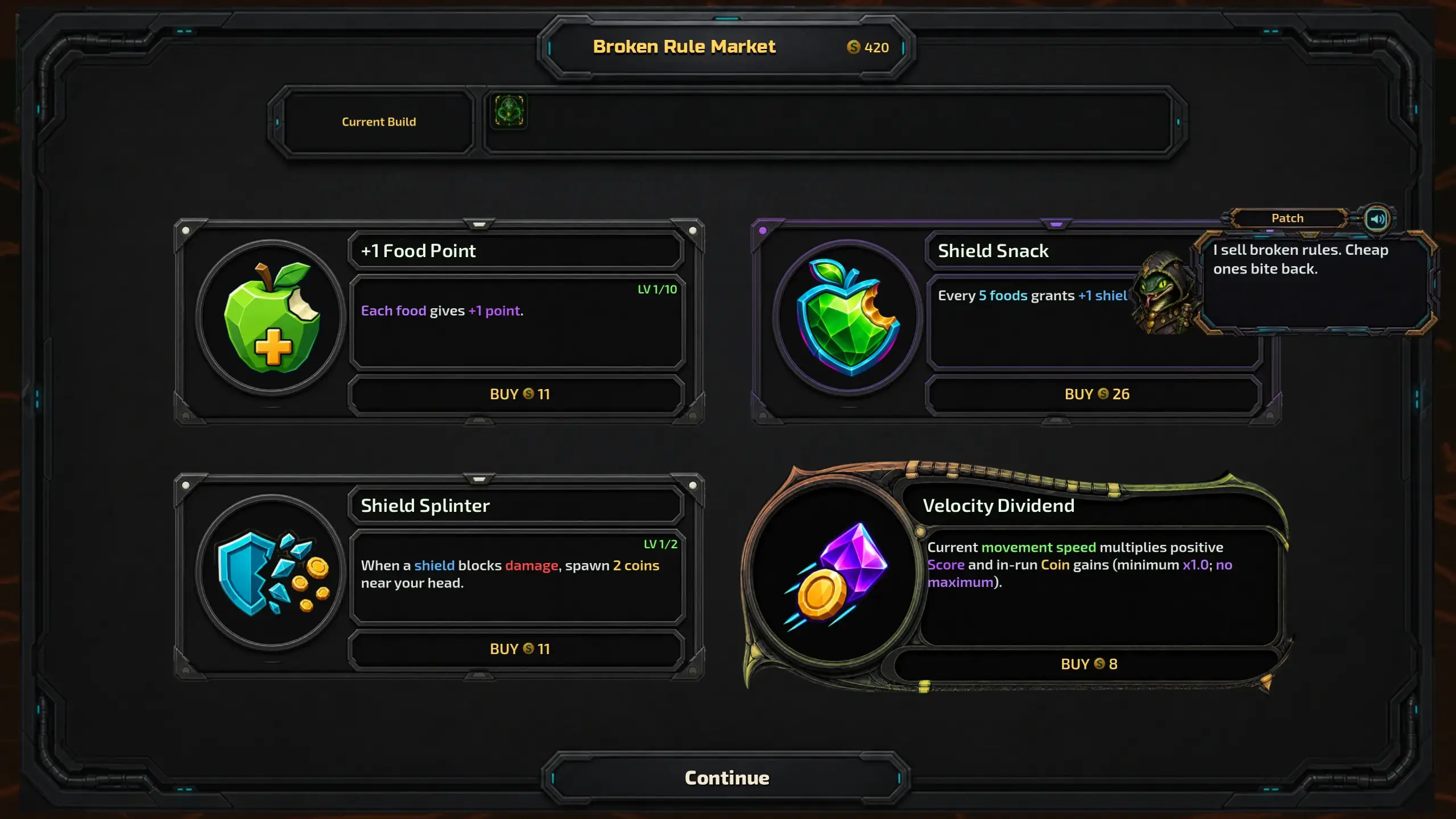
During our runs, besides collecting upgrades that may appear randomly, there are occasions when we can access a shop that allows us to purchase up to 4 upgrades if we have enough money. This is where the roguelike aspects truly shine, allowing us to create all kinds of combinations that lead to highly varied and, in many cases, extremely chaotic builds.
Once we complete the objective of the current level, we can remain in the same maze to earn additional points. If we accumulate enough, we receive a random upgrade, but we must be careful because it may be one that we do not want, and there is no way to cancel it. Finally, at the end of each level we are presented with a selection of 3 or more upgrades (depending on level and unlockable extras), from which we may choose only one.
Gameplay
Before trying the game, I was not very convinced because I was never a fan of the original Snake. However, since I am usually very fond of roguelikes, I decided to give it a chance, and I am glad I did because I ended up enjoying the experience a great deal, more than I could have imagined. This reinvention not only introduces new mechanics and much more frantic and competitive gameplay, but also manages to become a game with its own identity.
As challenging as it is chaotic, depending on our decisions, not only when choosing which upgrades to use but also how long to remain in each maze and how far to push our abilities in order to increase our score. The balance between cost and reward can be subtle when playing safely, but completely unforgiving if we decide to take greater risks driven by greed.
The difficulty is very well balanced. I found it impossible to complete the first loops until I had reached a certain level and unlocked enough upgrades, but as our arsenal grows and we become better at the game, we are able to go farther and farther. At the time of writing this article, I have played for more than 8 hours (not counting the hour and a half spent on the demo) and have managed to complete six of the loops, with the latest ones on hard difficulty.
Launch Date
The game is still currently in development and will be released on Steam in November 3 as an Early Access title. This means there will be changes, improvements, and additions over time. Development is being handled by a single person, and although the concept may seem simple, the work being done is noteworthy. Obviously, it is not perfect, and there are some minor flaws here and there, but in general they do not affect gameplay or ruin the fun. Furthermore, during these weeks I have personally witnessed how every small reported issue has been corrected very quickly.
Honestly, I highly recommend this game both to fans of the original and to those who are not but are looking for a game that allows for quick sessions without requiring hours of commitment each time they play. You can sit down and complete a specific loop, or simply make several attempts to see how far you can get with different builds while earning gold and experience that will help you in future runs.
I am confident that this game will be very well received by players once it reaches the market. As is often the case with independent releases, a large part of its success will depend on its sale price. If it launches at too high a price, that is always a risk, especially at the beginning when the amount of content available is more limited and expands later. However, if the price is set at a level that is not a barrier to entry for the community, we will almost certainly be looking at a major success, as it offers a great deal of fun and challenge without requiring powerful hardware.


