




Ramiro Corona
About Author
Dice Looter is an auto-battler focused on how we manage our inventory. The idea is to recreate that experience so familiar to RPG players of spending hours deciding which pieces of armor to swap, which weapon suits us best depending on the passive attributes accumulated from each armor set, and so on. Its creator told us that the idea came from his memories of playing Perfect World, where he spent thousands of hours using online calculators to create the best possible builds, and that is precisely the essence he aims to convey.
If that is something you also enjoy or find nostalgic, then this game may be for you. Matches are short gameplay loops that allow us either to get completely hooked and try again several times or to say “I’ll play just one run” and actually stick to it. It is also easy and convenient to come back to from time to time because you know you will not have to dedicate sessions of 40 minutes or more to it.
In addition, because it is a fully paused game and battles are fought automatically, we can play while simultaneously doing almost any other task.
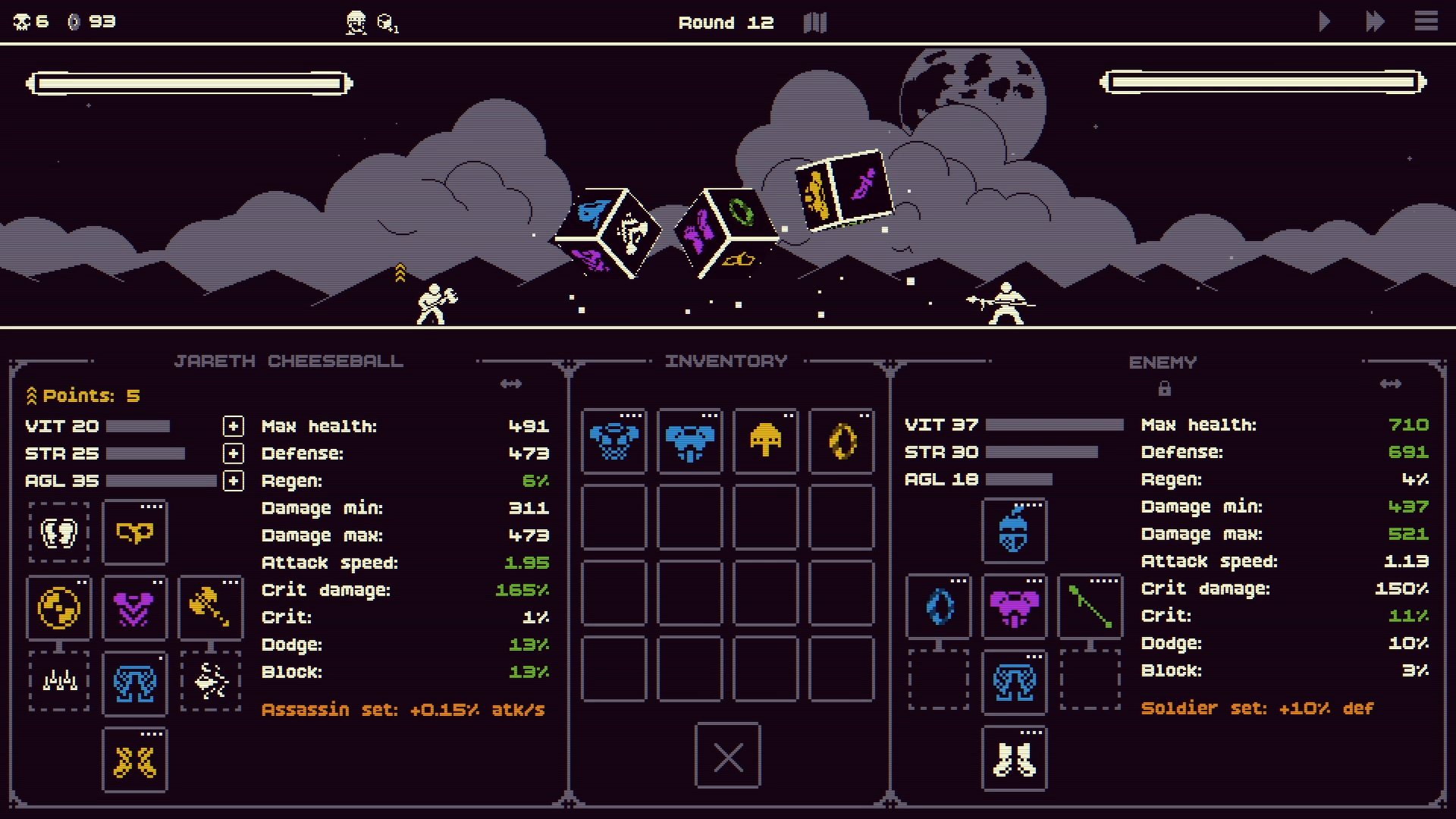
At the beginning of each run, we must select a character class, each with its own passive attribute, a modifier, and optionally one or more curses, which increase the difficulty but also the potential rewards. Each round begins with rolling three dice. Each face can contain a random item, although some may be empty. We can keep the items we like and either equip them or store them in our inventory to sell later, or we can reroll the dice containing items that do not interest us.
This is how we gradually build our character setup. Naturally, every item has its own level and rarity. In the case of armor, we can also create sets that grant passive bonuses, and the more pieces of a set we have, the greater the bonus becomes. Once our inventory is ready, we start the fight and combat proceeds automatically.
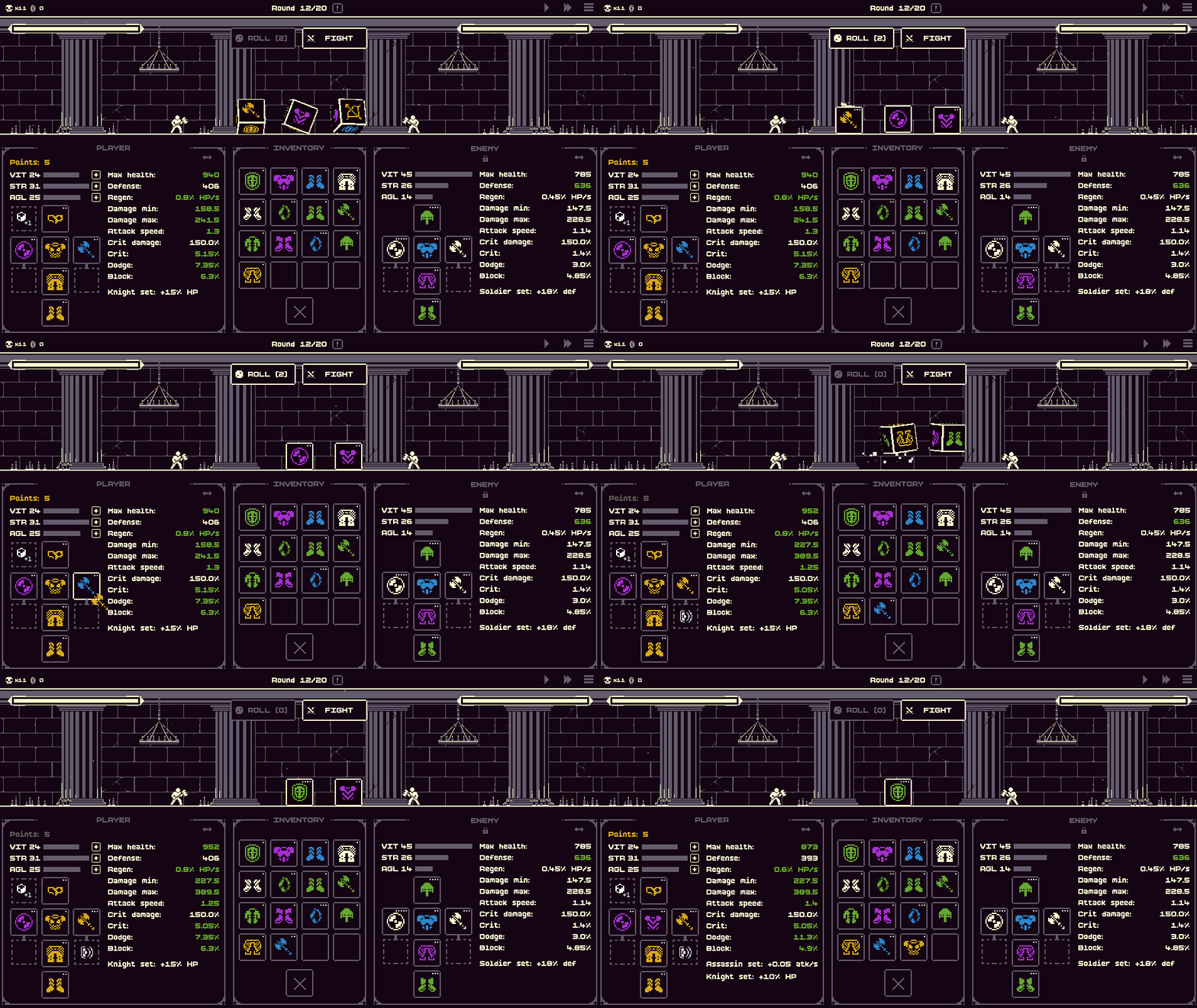
If we win, we gain a level, which grants us five points to distribute among our core attributes: Vitality, Strength, and Agility. If we lose, we can roll a die and, if the result is favorable, revive before re-entering the battle. This means we regain the opportunity to obtain more items and challenge the encounter again. If we roll a skull, our hero is lost forever. However, we keep any skulls we have earned, and these can be spent to unlock new items and abilities that may appear randomly on future weapons, rings, and shields.
Every run begins with our character equipped only with the most basic sword, and it is up to us to build them using whatever items appear from the dice. As we progress and assemble an optimal setup, many of the items we find can be saved and later sold at shops or to the blacksmith.
The routes are divided into two sections, each with its own branching paths that allow us to choose which way to proceed. In addition to standard enemy encounters, there are elite encounters, which are considerably stronger but reward us with skulls.
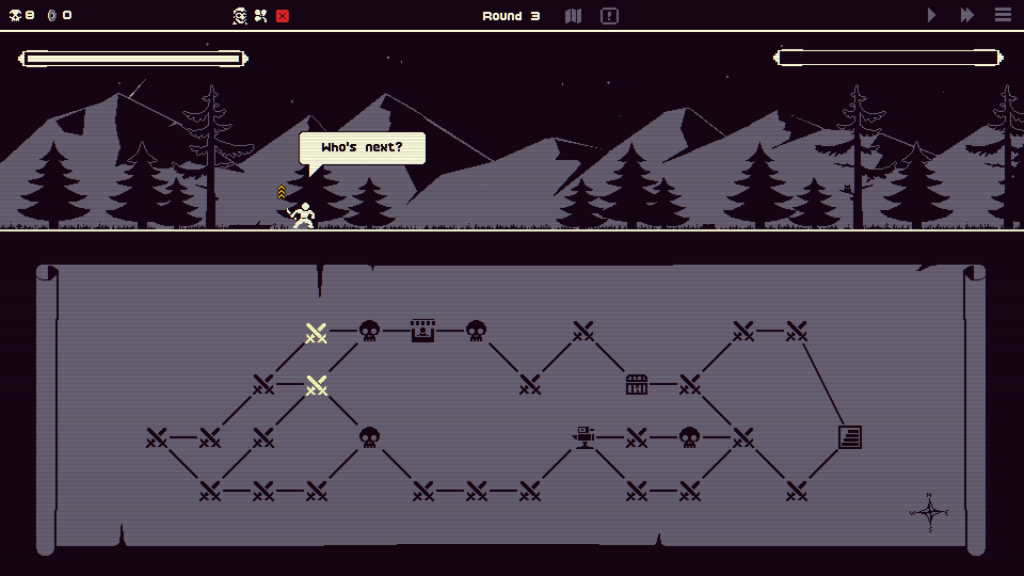
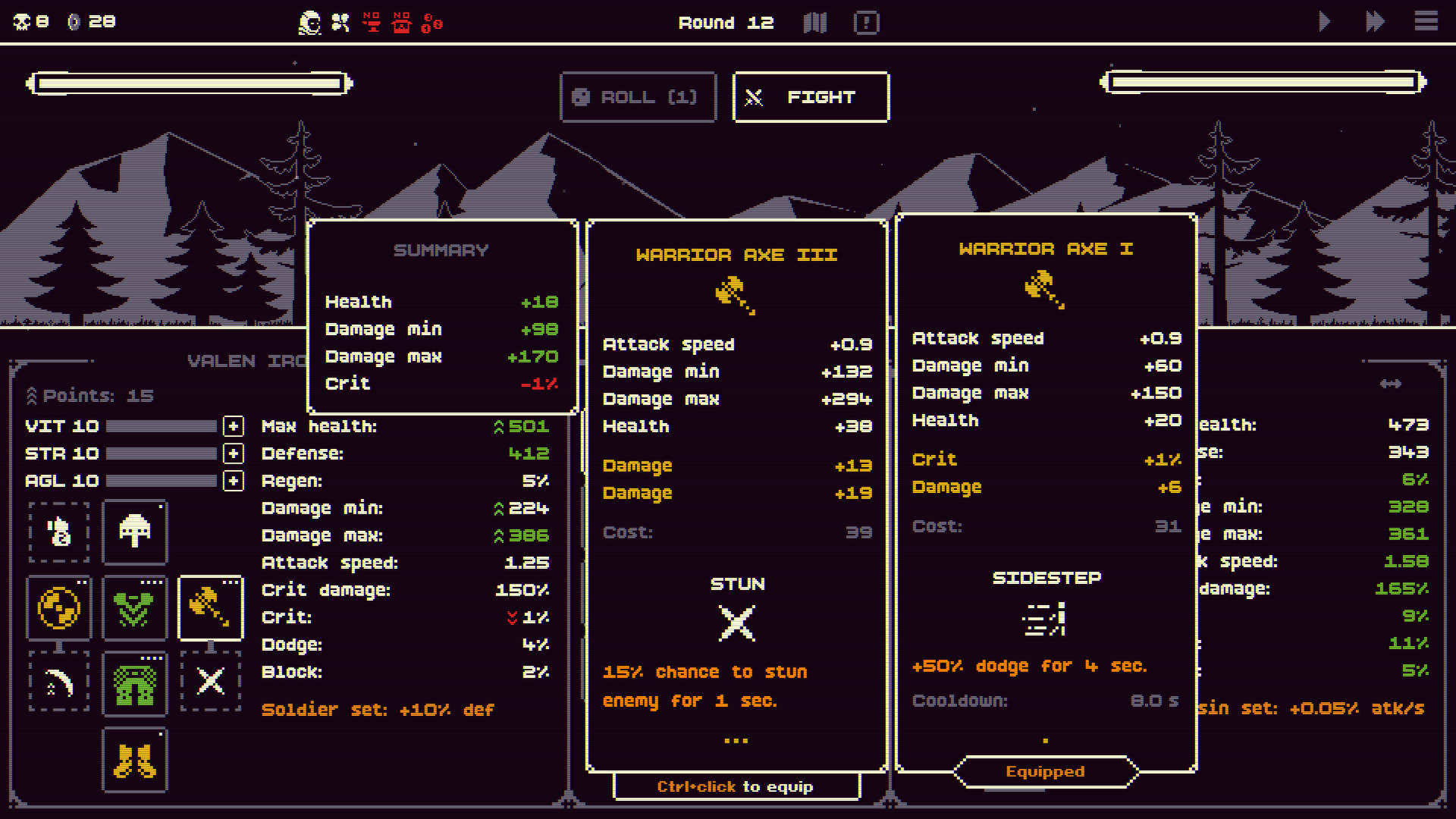
There are also chests, which reward us with random items without the need to fight; shops, where we can sell unwanted equipment and use gold to purchase new items; and the blacksmith, who allows us to improve either an item’s rarity or its level (but not both). At the beginning of the interaction, we are asked which option we want. This is one of the game’s most interesting features because, after placing the item we want to improve, we are presented with a bar that lets us choose the success rate. The higher the chance of success, the more expensive the upgrade becomes.
If we manage to reach the final tile of the second route, we will face the final boss. Should we defeat it, our character will become the final boss of future runs until an even stronger character manages to replace it.
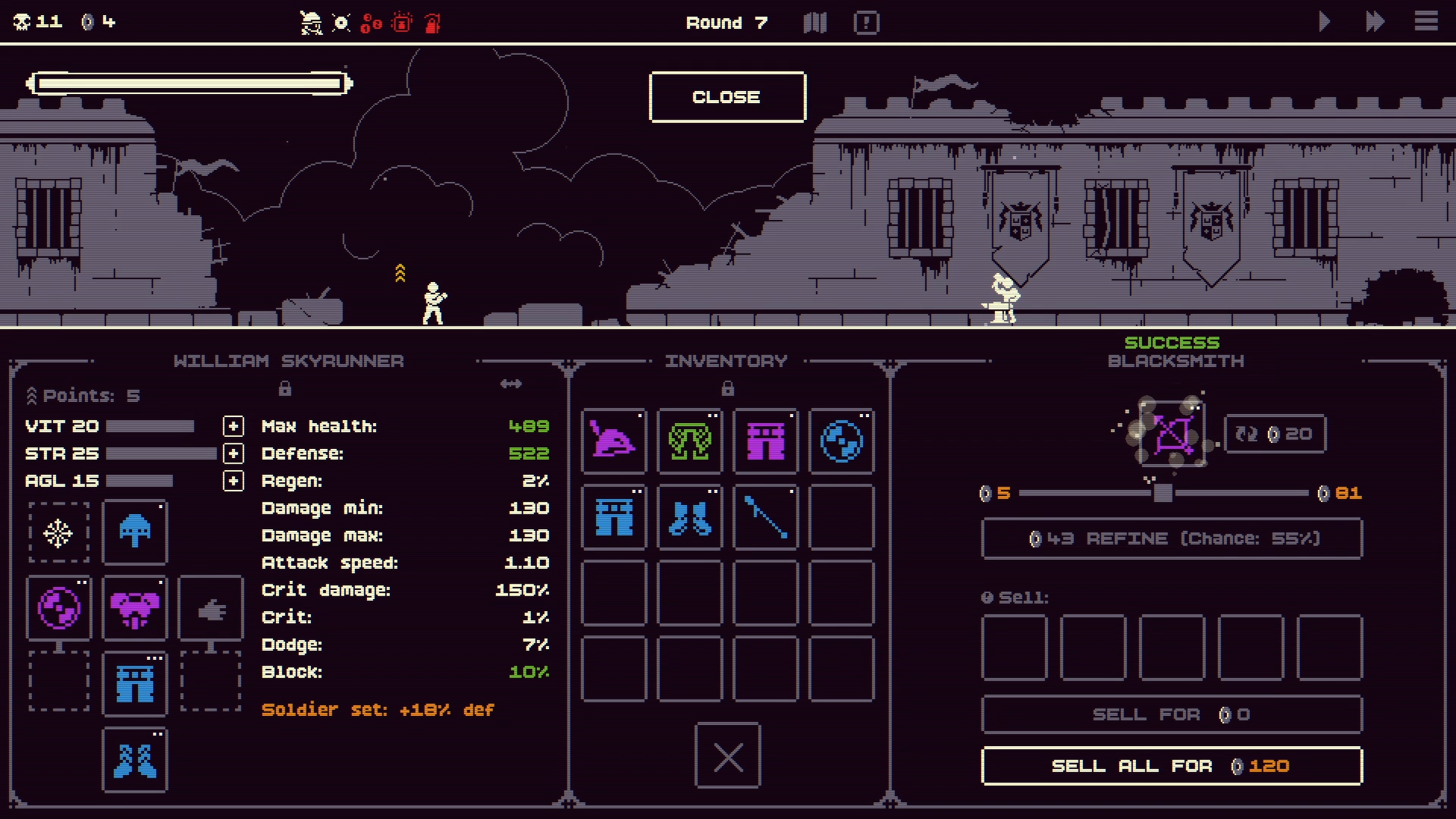
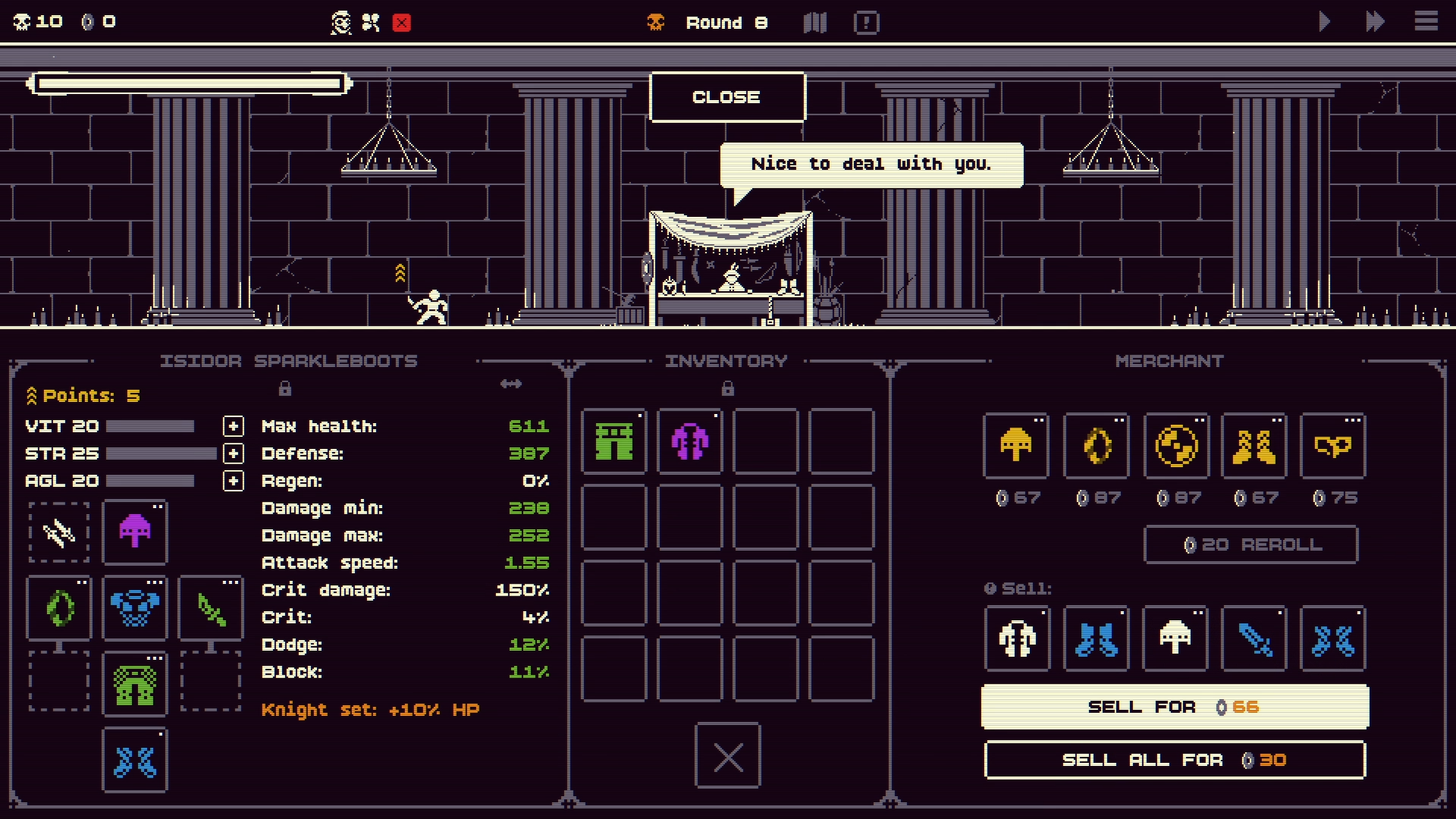
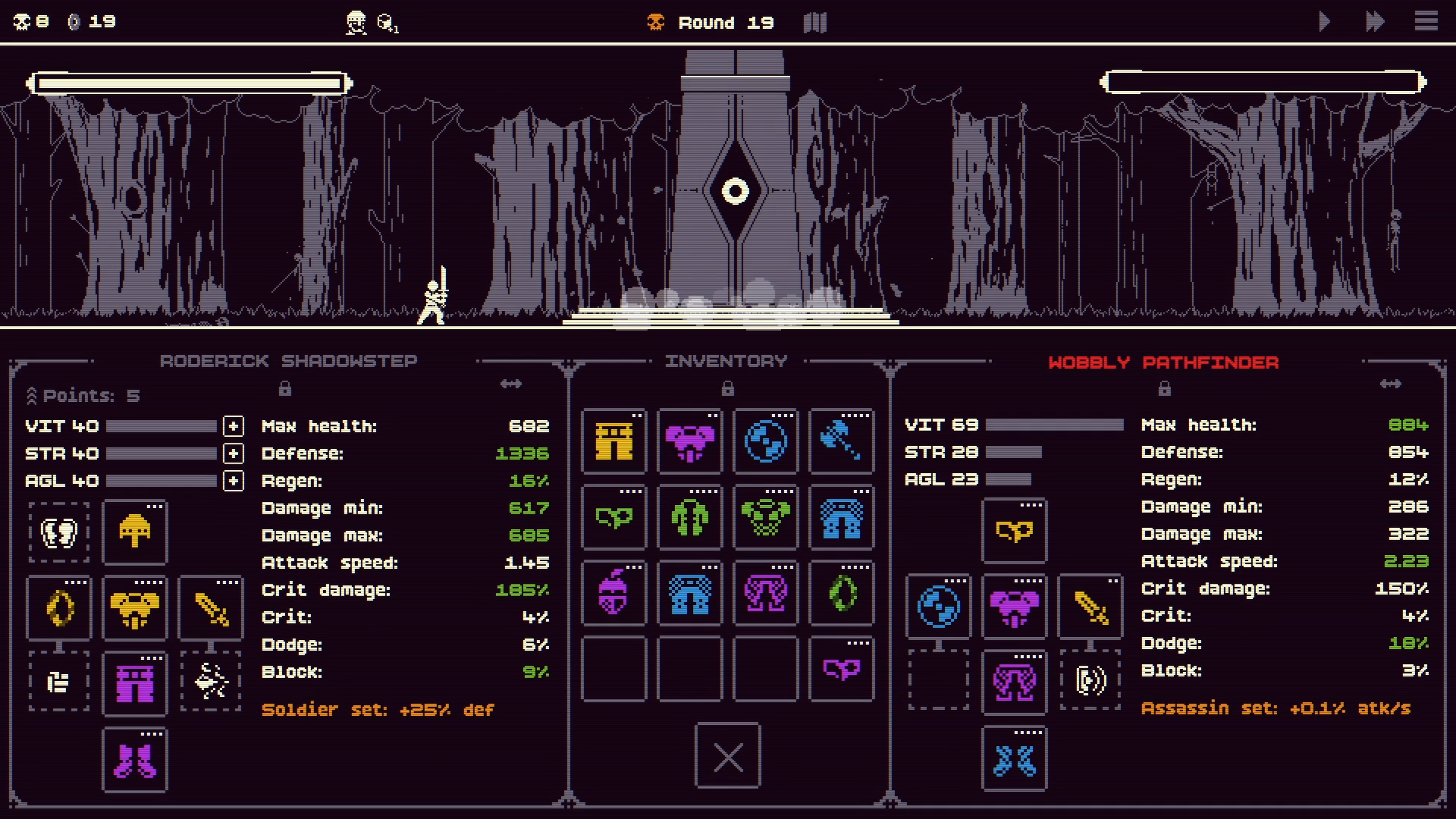
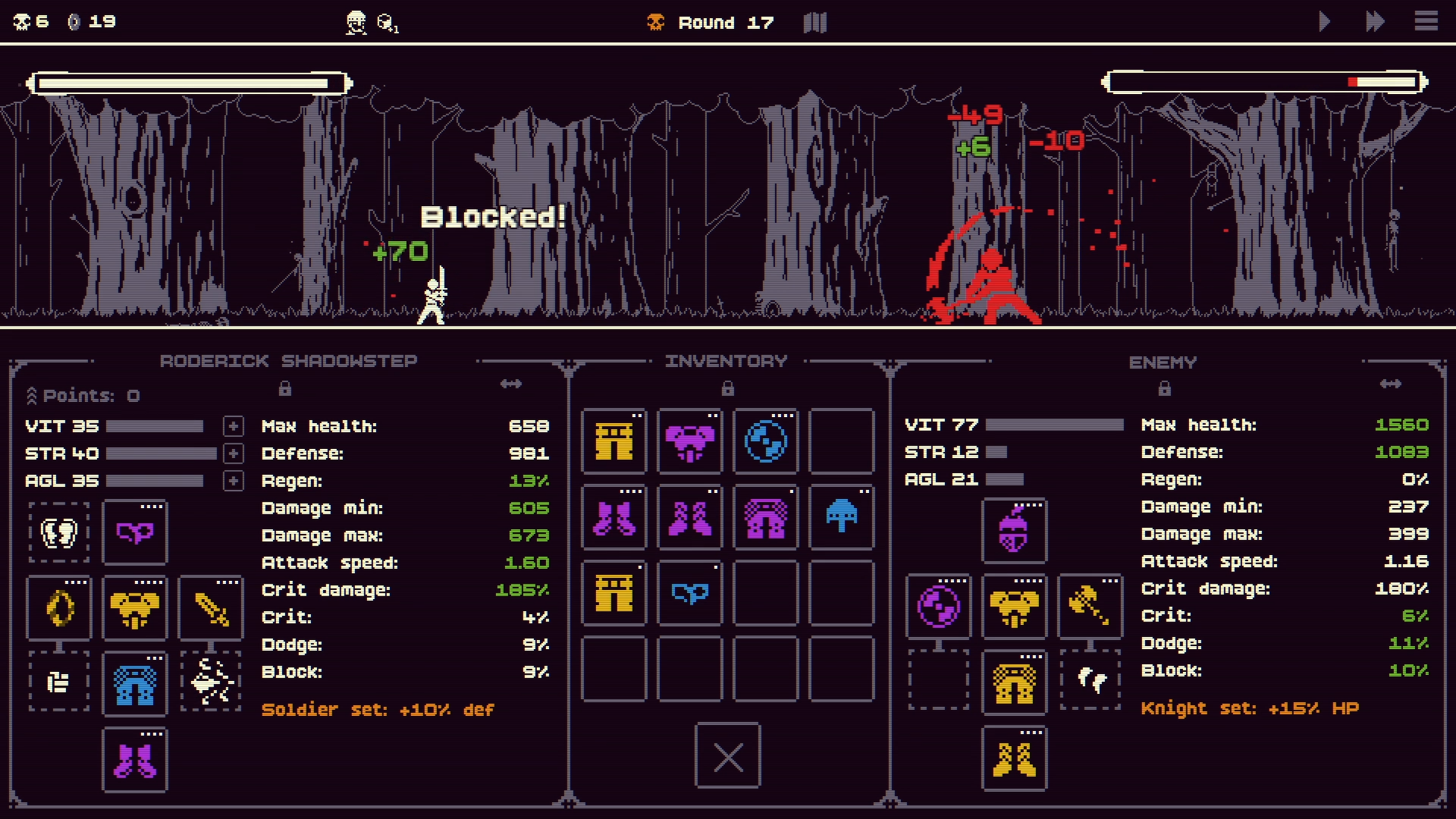
The audiovisual presentation is extremely simple: two-color pixel-art graphics reminiscent of a Game Boy, featuring straightforward environments and animations that are easy to interpret. The few colors that are used serve either to represent statistics, attacks, and healing effects, or to identify item rarity.
However, simplicity should not be confused with lack of quality. On the contrary, the game presents a polished and highly effective visual style that ensures the graphics never distract from what truly matters: inventory management. In this regard, the game remains consistently clear and makes it easy to understand how each equipment change affects our statistics.
The game has been developed in Godot by the independent studio 3 Blackpixels, which currently consists of a single Ukrainian developer who handles both the programming and visual aspects of the project in his spare time. It is also worth considering the additional difficulty of living in a country that is currently suffering an armed invasion, with all the challenges that entails, not to mention the human impact of the situation.
Andrii told us that his goal is to start with a small project, explore one or two core mechanics, and make the most of them without falling into an endless accumulation of systems that ultimately dilute or even change the game’s original essence. In fact, he told us quite plainly that he follows the rule of: “Make the game that you yourself want to play.”
The core idea behind Dice Looter is to make us experience the satisfaction of creating the perfect build with the items available to us. Naturally, this is not a game for everyone. If you are not the type of person who enjoys calculating stats, then this probably is not the game for you.
However, there are millions of players who genuinely enjoy optimizing builds and assembling the ideal equipment set, and that is the game’s greatest achievement. It does not need an open world, an extensive lore, or thousands of online players to provide an enjoyable experience. It succeeds through that sometimes obsessive need to squeeze every last digit out of our arsenal in order to become the best version of ourselves, at least until we find an even more powerful piece of equipment.
And then the cycle begins again. Once more we sit down to calculate the ideal setup, and the process continues indefinitely.
Dice Looter is available on Steam, and its system requirements are absolutely minimal, so hardware will not be a barrier to entry if the game interests you. It also includes a demo, allowing you to try it before making a purchase.
#DiceLooter #keymailer